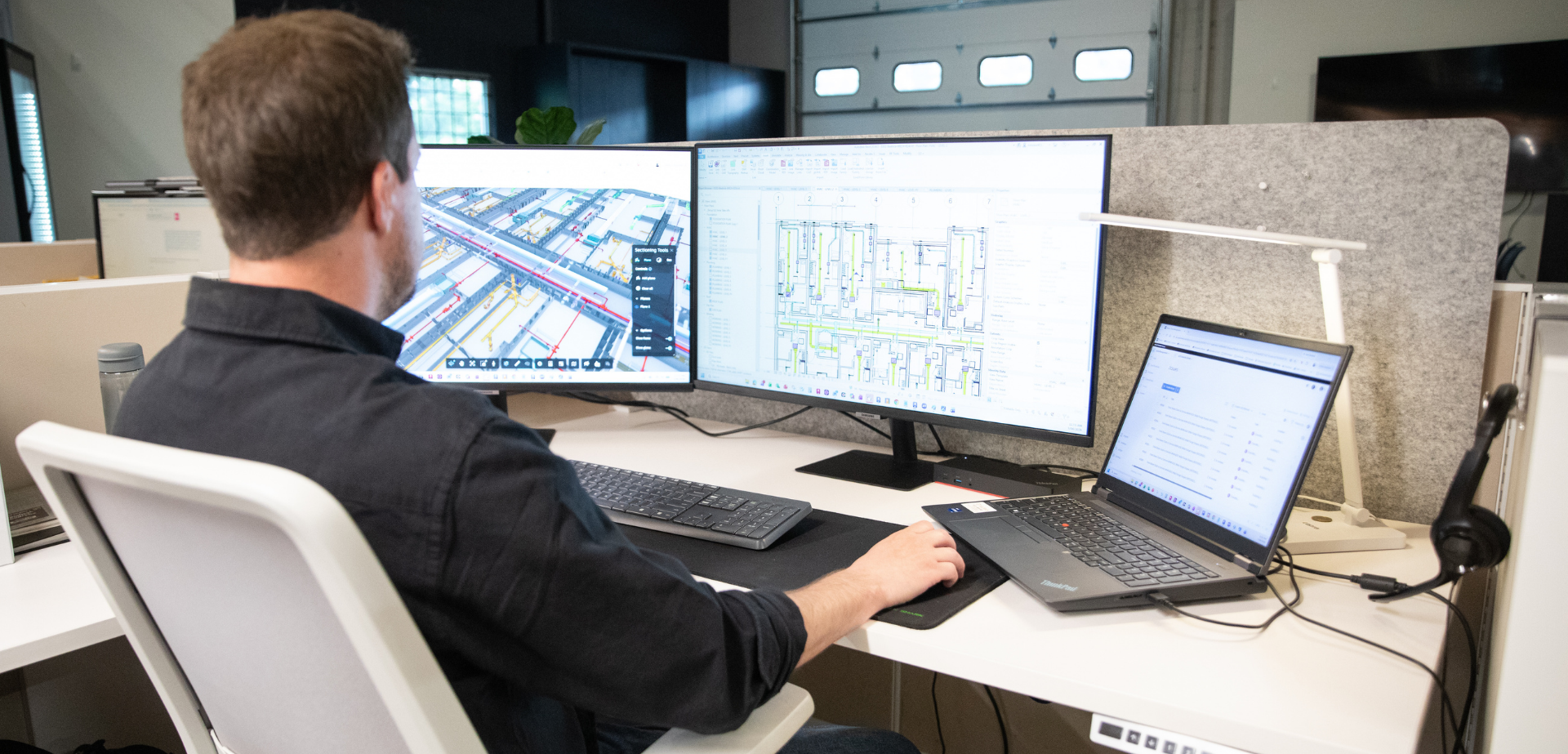
Building Information Modeling (BIM) creates a more proactive, transparent, and streamlined approach to project delivery by enabling potential issues to be identified and resolved earlier in the construction process. But realizing its full value requires more than simply creating a coordinated 3D model. It requires the expertise, strategic oversight, and integration needed to turn that information into better project decisions.
Across Kindred’s two divisions, Kindred Construction and Kindred Custom Homes, a dedicated in-house BIM team supports how our multi-family, mixed-use, and luxury custom home projects are planned, coordinated, and delivered. Rather than relying on BIM as a separate service, having this expertise in-house allows Kindred to embed BIM directly into project delivery, connecting clients, consultants, trades, and our project teams around the same information.
“We view BIM as a shared workflow that improves communication, accountability, and coordination across the entire project team,” says Matthew Beker, VDC/BIM Manager at Kindred Construction.
This approach offers three key advantages: integrated design and construction expertise, greater control and visibility over project information, and continuity from design through construction.
How In-House BIM Connects Design and Construction
One of the primary advantages of an in-house BIM team is having technical modelling expertise directly connected to the construction teams responsible for delivering the project.
Kindred’s VDC/BIM Manager, Matthew Beker, brings more than a decade of experience working within design consultancies alongside a trades background. This combination allows Kindred to engage consultants on a highly technical level while bringing a construction perspective to BIM coordination.
Having this expertise within the company allows the BIM team to work more closely with project teams, understand project-specific requirements, and identify coordination issues with consideration for how designs will ultimately be built on site.
This involvement can begin during the earliest design stages, when Kindred’s BIM team works with consultants to establish modelling standards, coordination protocols, and handover expectations. Rather than waiting until construction documents are complete, models can be reviewed as design progresses, allowing issues to be addressed before they become more costly construction problems.
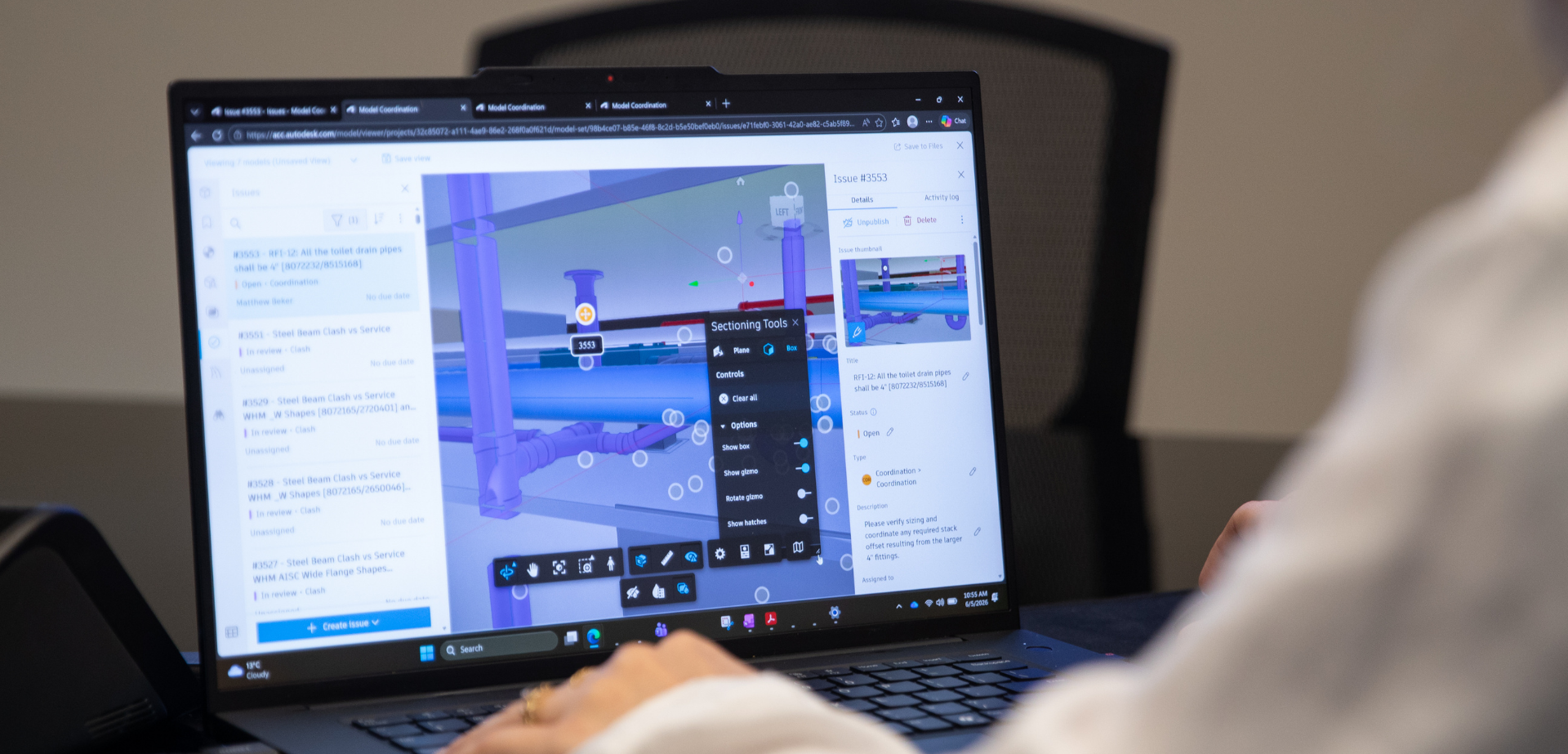
For consultants without in-house BIM capabilities, Kindred can also develop models directly from 2D drawings. This process can reveal missing information, inconsistencies, and unresolved details that may be difficult to identify across separate drawing sets. The true value is not just identifying these issues earlier, but having BIM expertise within the project teams allows these issues to be addressed with a greater understanding of the project’s overall delivery requirements.
Creating a Centralized Hub for Project Information
Another advantage of an in-house BIM team is the ability to manage and organize project information within a consistent, shared digital environment.
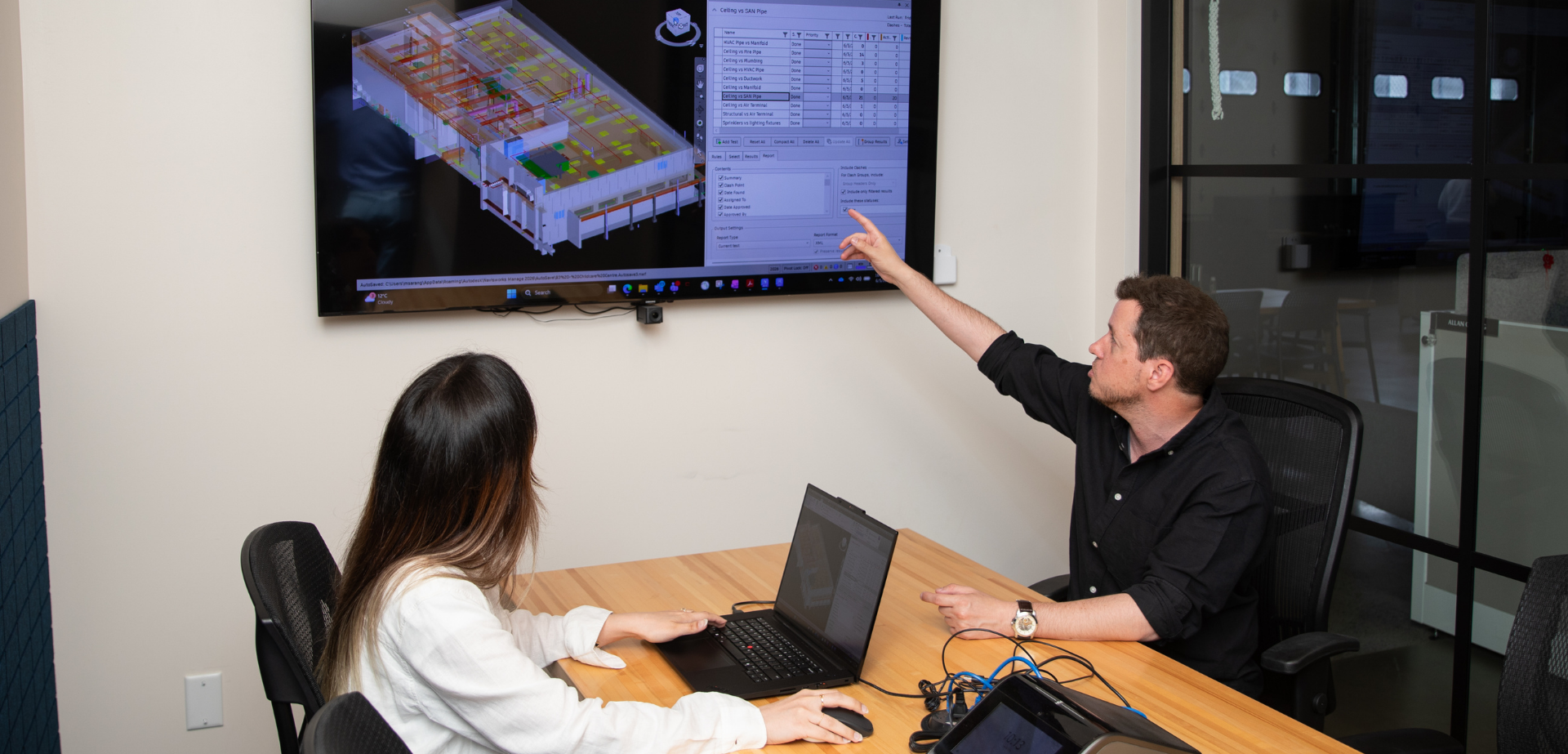
Through a centralized Common Data Environment (CDE), Kindred’s BIM team can bring together information from different disciplines, creating coordinated models and tailored views that allow clients, consultants, trades, and internal project teams greater transparency in accessing relevant information.
For clients, this provides greater visibility into how their project is coming together and the decisions that may affect cost, schedule, and the finished building.
For architects and design consultants, it provides a shared environment where coordination issues can be reviewed and resolved while maintaining visibility into how the design evolves.
For trades, coordinated models provide a clearer understanding of how different building systems interact, supporting decisions around installation sequencing, access, routing, and equipment placement before work begins on site.
With BIM managed in-house, Kindred can organize and communicate project information according to the needs of each stakeholder, creating greater alignment, transparency, and accountability throughout project delivery.

Maintaining BIM Model Continuity from Design Through Construction
A third advantage of having BIM in-house is the ability to maintain continuity in project information as a project moves from design into construction.
Traditionally, the transition between these phases can involve separate teams working from different models or recreating information that has already been developed. This can lead to duplicated effort, gaps in coordination, and a loss of valuable design information. With an in-house BIM team involved throughout the process, Kindred can maintain a more consistent approach to how models are developed, coordinated, and carried forward.
As projects transition into construction, Kindred works with trades to build upon existing design models, increasing their level of detail as the project progresses rather than starting from scratch. This helps reduce duplicated effort, preserve design intent, and maintain a more consistent source of information as responsibility shifts between consultants, trades, and project teams. Having the same internal BIM team supporting these transitions also provides greater familiarity with the project’s coordination history, outstanding issues, and decisions made during earlier stages.
Rather than treating design and construction as separate modelling practices, this approach helps maintain continuity in both the information and the people responsible for coordinating it.
The Future of Digital Construction
Kindred’s investment in BIM is part of a broader approach to digital construction. Establishing consistent BIM standards, structured project information, and reliable data across projects creates a stronger digital foundation for other technologies as the company’s capabilities continue to advance.
As Kindred’s portfolio of BIM-enabled projects grows, the information and experience captured across those projects can increasingly inform future planning, coordination, and decision-making. By maintaining BIM expertise within the organization, Kindred can continue developing its processes, applying lessons learned across projects, and strengthening how digital information supports construction delivery.
Ultimately, the value of an in-house BIM team extends beyond the models themselves. It lies in connecting technical expertise, project information, and project teams through a consistent, integrated approach to project delivery.